Rising HIV rates among women reveal deeper social, emotional, and biological challenges. Learn why infections are increasing and what women can do to stay safe.
Read DISCLAIMER
Contents
- 0.0.0.0.0.1 Read DISCLAIMER
- 0.0.0.0.0.2 The material presented here is for general informational and educational purposes only and is not medical advice. Although we attempt to provide current and accurate information, this blog should not be used as a replacement for professional medical consultation, diagnosis, or treatment. In all cases, consult your physician or an accredited medical practitioner with regards to any medical condition or treatment. Do not ignore professional medical advice or wait for it on the basis of information provided by this blog. In a medical emergency, call emergency services immediately.
- 1 The Quiet Rise No One Wants to Talk About
- 1.1 Why HIV Among Women Is Rising: The Misunderstood Reality
- 1.2 Biological Vulnerability: What Makes Women More Susceptible
- 1.3 The Social and Emotional Landscape: How Women Become Vulnerable Without Realizing It
- 1.4 How Stigma, Silence, and Shame Push Women Closer to Risk
- 1.5 Poverty, Stress, and Gender Inequality: The Invisible Drivers of HIV
- 1.6 HIV in Married Women: The Most Invisible Epidemic
- 1.7 Young Women and Adolescents: A New Wave of Risk Emerging Quietly
- 1.8 The Influence of Internet Exposure and Dating Apps: A Double-Edged Sword
- 1.9 Domestic Violence, Coercion, and Forced Intimacy: The Darkest but Most Ignored Factor
- 1.10 Why Traditional Prevention Messages Fail Women
- 1.11 The Emotional Toll of an HIV Diagnosis on Women
- 1.12 What Women Can Do to Protect Themselves: Realistic, Practical, Emotionally Grounded Guidance
- 1.13 The Role of Partners, Families, and Society in Protecting Women
- 1.14 How Schools, Healthcare Workers, and Communities Must Change
- 1.15 A Future Where Women Are Empowered, Aware, and Safe
- 2 Conclusion: A New Beginning Built on Courage, Compassion, and Clarity
The material presented here is for general informational and educational purposes only and is not medical advice. Although we attempt to provide current and accurate information, this blog should not be used as a replacement for professional medical consultation, diagnosis, or treatment. In all cases, consult your physician or an accredited medical practitioner with regards to any medical condition or treatment. Do not ignore professional medical advice or wait for it on the basis of information provided by this blog. In a medical emergency, call emergency services immediately.
The Quiet Rise No One Wants to Talk About
There are moments in life when a single piece of information stops you in your tracks. For many women, that moment comes not with a diagnosis, but with a realization — that HIV is not a distant, outdated threat from the 1990s, but a present-day reality quietly growing in strength. You may have heard stories from neighbours, friends, or women in your workplace, stories whispered in fear or buried under shame. A young mother who suddenly starts losing weight and avoids conversations. A newly married woman who begins to question why she feels constantly unwell. A college student who trusts someone she shouldn’t have trusted. None of these stories are loud or sensational; they happen quietly, almost invisibly, and that is what makes the rise of HIV among women so heartbreaking.
When you look beyond the statistics and medical terms, HIV is not simply a virus — it is a story of vulnerability, trust, silence, social pressure, unequal relationships, and the complicated realities of a woman’s everyday life. Unlike diseases that announce themselves through obvious symptoms, HIV creeps in through moments of emotional intimacy, cultural expectations, relationship dynamics, and sometimes even through acts of survival. Women often carry the emotional weight of families, relationships, and responsibilities, and this makes them more exposed than many people realize. While the world believes that awareness has improved, many women still face circumstances that prevent them from protecting themselves. And so the question arises: Why are infection rates rising among women, even when we have more information than ever before?
This blog is an attempt to answer that question with honesty, compassion, and depth. It is written not just to inform you, but to hold your hand through the complexity of the issue — to show how intricate, personal, and emotional the journey of prevention and awareness really is. Whether you are a woman seeking clarity, a family member wanting to help, or a health-conscious reader trying to understand the world better, this is a space where you will be seen, heard, and understood.
As we begin, try to imagine not the virus, but the women living behind the numbers — women who work tirelessly, love deeply, trust wholeheartedly, and yet find themselves at risk of something they never thought would touch their lives. Their stories deserve to be told with gentleness and truth. And that is exactly where this journey begins.
Why HIV Among Women Is Rising: The Misunderstood Reality
The rise in HIV infections among women is not something that happened suddenly; it is the outcome of years of social conditioning, unequal power dynamics, emotional dependence, misinformation, and silence. When we say “HIV is increasing among women,” many people assume that it must be because women are taking risks or engaging in unsafe behaviour. But when you step into the lived reality of a woman’s day — her relationships, her responsibilities, her fears — you realize it is not about risky behaviour at all. It is about environments that don’t allow her to protect herself, relationships where she cannot negotiate safety, and social norms that reward silence and punish assertiveness.
Imagine a woman in her early thirties who loves her husband deeply. She believes that marriage automatically means safety. She never questions whether she should use protection because society has taught her that asking such questions destroys trust. Now imagine that her husband, due to peer pressure or emotional loneliness, makes a mistake outside the marriage. This woman, who has been loyal and trusting, becomes the one who suffers. The world might judge her, but the truth is that her “risk” came from loving honestly. These are the situations that rarely get discussed openly, but they are happening every day.
Then think of a young college girl who falls in love for the first time. She may not have enough knowledge or the courage to insist on protection. She may fear losing her partner if she speaks up. That moment of vulnerability becomes a lifelong health risk. Again, the “risk” did not arise from irresponsibility but from emotional innocence.
For many women, economic dependence plays a huge role in this rising trend. A woman who financially relies on her partner often feels she has no right to question his behaviour. A woman who works long hours to support her family may not have the time or energy to attend health camps or seek sexual health counselling. Overworked mothers, rural women with limited access to healthcare, women from conservative families who fear judgement — all these factors weave a complicated web that traps women into vulnerability.
What makes the situation even more painful is that many women discover HIV only during pregnancy check-ups. They walk into an antenatal clinic excited about becoming mothers, only to be told they are HIV-positive. And in most cases, the woman does not know that she was exposed through her partner. These are not just medical stories; they are emotional wounds that run deep, especially because society often blames the woman first.
This rising trend is not about women making wrong choices. It is about women carrying the consequences of choices made by others, combined with the lack of safe spaces, open conversations, and empowered decision-making.
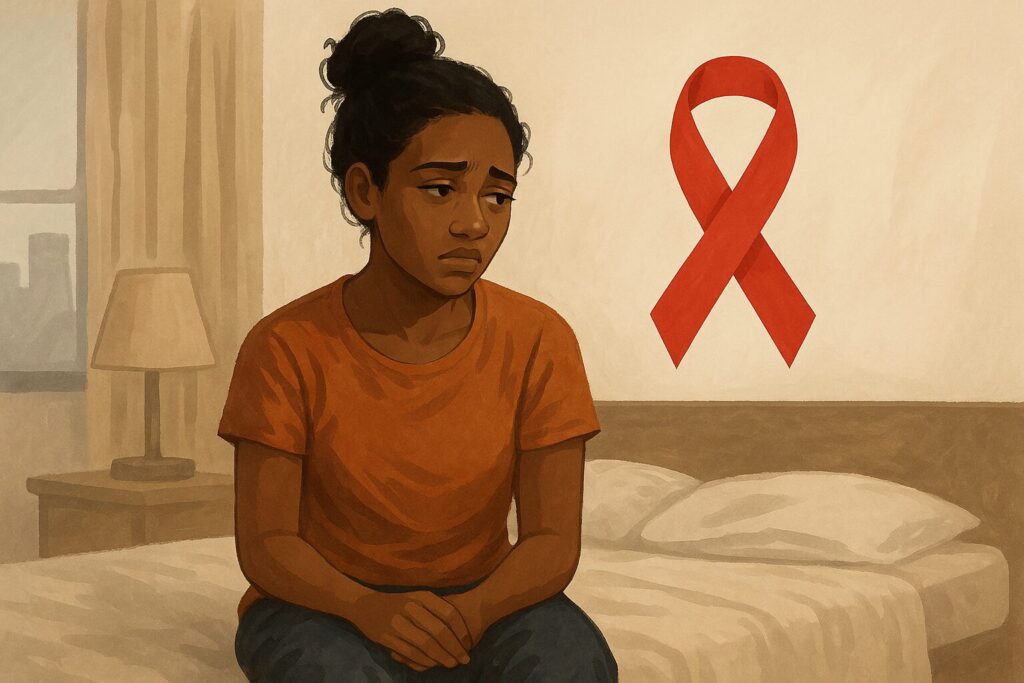
Biological Vulnerability: What Makes Women More Susceptible
Biology plays a quiet but powerful role in this rising trend, and understanding it helps remove the shame that many women carry unnecessarily. The female reproductive system, while beautiful and capable of creating life, is also structured in a way that increases the likelihood of HIV transmission compared to men. When a woman engages in heterosexual intercourse, the virus has a larger mucosal surface area to enter through, and semen — because it stays inside the body longer than vaginal fluids — carries a higher concentration of the virus, giving it more time to find its way into the bloodstream.
But the vulnerability does not stop at anatomy. Hormones also shape the risk. For example, during menstruation or just before it, the cervix may become slightly more delicate or inflamed, making it easier for the virus to enter. Infections like vaginal yeast infections, bacterial vaginosis, or untreated STIs weaken the protective lining, further increasing the risk. Women who experience dryness due to hormonal imbalance, breastfeeding, menopause, stress, or certain medications may experience micro-tears during intercourse, creating microscopic entry points that are invisible but dangerous.
These biological factors have nothing to do with morality, character, or behaviour. They are simply part of being a woman. Yet, many women blame themselves or feel “dirty” when diagnosed with HIV. Understanding the biological side helps shift the narrative away from shame and towards informed self-care.
To truly understand the biological vulnerability, imagine a woman’s body as a house with multiple windows. When the windows are strong and sealed, very little can get inside. But if one window becomes cracked due to stress (like a vaginal infection), or if the weather becomes harsh (like hormonal changes), the chances of something harmful entering increases. The virus is not a punishment; it is an opportunist. And women, because of natural biology, are simply more exposed.
The Social and Emotional Landscape: How Women Become Vulnerable Without Realizing It
When we talk about HIV risk, many people imagine a direct, visible threat, as if the virus only affects people who knowingly put themselves in danger. But a woman’s world is far more intricate than that. Her risk is shaped not by one moment, but by countless layers of family pressure, emotional expectations, responsibilities, cultural conditioning, and the need to maintain harmony in relationships. Most women do not wake up thinking they might get exposed to HIV; they wake up thinking about their child’s breakfast, their household chores, college deadlines, or work stress. HIV slips in quietly, often through circumstances she never imagined would put her health at risk.
To understand this, imagine a woman who is deeply committed to her family. She loves her partner, takes care of her children, supports her in-laws, and manages a demanding job. In all of this emotional labour, where does she have the space to think about protecting herself? Society expects her to prioritize everyone else first — and women do it so naturally that they rarely realize how much of themselves they sacrifice. If she is unhappy in her marriage, she is told to “adjust.” If she tries to ask her partner to get tested, she fears being accused of mistrust. If she wants to learn about sexual health, she is often labelled as “characterless.” In this environment, the simple act of protecting her health becomes emotionally complicated.
Emotional dependence plays a significant role too. Many women stay in relationships even when something feels wrong because they fear loneliness, judgment, or financial insecurity. Love, loyalty, faith, and hope are beautiful emotions, but they can also make a woman ignore her own intuition. She may trust her partner even when he behaves differently or becomes distant. She may silence her concerns to “keep the peace,” telling herself everything is fine. This silence, born from the desire to maintain emotional stability, sometimes becomes the very door through which HIV enters her life.
And then there is the emotional pressure of proving oneself to society. Girls are often raised to be obedient, understanding, forgiving, and patient — qualities that are beautiful but dangerous when used against them. A woman may not feel empowered enough to say “no” when she needs to, or she may hesitate to ask for contraception because she fears being perceived as promiscuous. Society has conditioned women to prioritize emotional harmony over personal safety, and this conditioning makes them vulnerable in ways that have nothing to do with morality or decisions, but everything to do with upbringing.
Understanding this emotional landscape is essential because HIV prevention is not just a medical issue. It is deeply intertwined with the way women are taught to love, trust, behave, and sacrifice. Unless these emotional realities are acknowledged, women will continue to face risks without even realizing they are stepping into danger.
How Stigma, Silence, and Shame Push Women Closer to Risk
One of the most heartbreaking reasons HIV continues to rise among women is the silent wall of stigma that surrounds the topic. Even though we live in a world that has made progress in technology, education, and awareness, the moment the word “HIV” is mentioned, many people still react with fear, judgement, or discomfort. This stigma becomes the biggest barrier between a woman and her ability to protect herself.
Imagine a young woman who wants to ask her doctor about HIV prevention. But she’s worried: “What if they think I’m doing something wrong?” So she stays silent. That silence becomes a risk.
Imagine a married woman who senses something is off with her partner but fears asking for an HIV test because she might be blamed, judged, or ridiculed. Her silence becomes a risk.
Imagine a teenage girl who wants to buy a condom but feels ashamed because society has taught her that women shouldn’t talk about these things. Her silence becomes a risk.
When stigma surrounds sexual health, women end up living with unanswered questions. They avoid testing until it’s too late. They avoid treatment because they fear neighbour gossip. They avoid conversations with partners because society teaches them that good women don’t talk openly about sex, safety, or consent.
Another dimension of shame is how society treats a woman once she receives a diagnosis. Instead of receiving support, many women are blamed and accused, even if they got the infection from their own spouses. This judgement forces women to hide their condition, skip medications, or avoid seeking medical help — and this secrecy worsens their health.
Shame silences conversation. Silence destroys awareness. And lack of awareness increases risk.
Until society stops viewing HIV as a moral failure and starts seeing it as a medical condition, women will continue to suffer quietly. The virus thrives not in the human body alone, but in the silence that society forces upon women.
Poverty, Stress, and Gender Inequality: The Invisible Drivers of HIV
Beyond emotions and stigma, there is an even deeper layer that pushes women into risk — the social and economic realities they live in. Poverty does not just mean lack of money; it often means lack of choices. A woman who is financially dependent cannot afford to question her partner, negotiate safer sex, or walk away from a risky relationship. She may know the dangers, but awareness without independence becomes helplessness.
Picture a woman working long hours in a small factory or as domestic help. Her earnings support her children’s education and her family’s daily needs. She barely has time to rest, let alone visit a clinic for health education or HIV testing. Her life is built around survival, not prevention. If her partner is unfaithful or unsafe, she does not have the power to demand protection because she fears losing financial security.
Stress also plays a role. Women who are constantly overwhelmed — managing homes, jobs, ageing parents, kids, and relationships — often ignore their own health. They put self-care last because they believe they must stay strong for everyone else. Under constant stress, their immunity weakens, making them more susceptible not only to infections but also to the emotional vulnerability that comes from exhaustion. A tired mind often avoids confrontation or difficult conversations, which prevents women from discussing sexual safety.
Gender inequality is the thread that weaves through all of this. A woman might know about HIV and still feel powerless to protect herself because social and cultural rules teach her to obey, endure, and stay quiet. She may not have the authority to demand safer sex. She may not have access to good healthcare. She may not have the freedom to leave an unhealthy relationship. And even when she does want to take charge, she is judged for doing so.
When you combine poverty, gender inequality, emotional suppression, and societal pressure, the result is a dangerous trap — one that women fall into not because of their behaviour, but because of the environment they are forced to survive in.
HIV in Married Women: The Most Invisible Epidemic
One of the most painful truths about rising HIV rates is that married women are among the most affected groups — and yet their suffering remains mostly unseen. When society thinks of HIV, it imagines unmarried individuals, unsafe sex, or multiple partners. But reality tells a different story.
Many married women become infected despite being completely loyal to their partners. They enter marriage believing that commitment equals safety. They rarely imagine that they need to protect themselves within the relationship that society claims is “the safest place” for a woman.
Imagine a newlywed who dreams of building a home with her husband. She trusts him completely, because marriage promises stability. But if he had past relationships, risky behaviours, or habits he never discussed, she unknowingly becomes vulnerable.
Imagine a woman married for ten years who suddenly develops chronic infections or unexplained fatigue. When she gets diagnosed with HIV, she is shocked, devastated, and confused. She might ask herself — “Where did this come from?” — only to realize the answer lies in choices she never made.
Many women discover HIV during routine pregnancy check-ups. They walk into the clinic excited to hear their baby’s heartbeat and walk out with the heaviest news of their lives. But instead of receiving compassion, they often receive suspicion. Society questions her, even though she is the one who has been faithful.
Married women rarely negotiate for safe sex because marriage is built on expectations of trust. Asking for protection becomes “a sign of doubt,” which many women avoid due to fear, guilt, and social conditioning. And because women often see sexual health as a taboo subject, they don’t express discomfort, pain, or concerns until something goes terribly wrong.
This invisible epidemic among married women is the consequence of a system that teaches women to trust blindly, obey silently, and sacrifice endlessly. Their risk does not come from their behaviour but from a world that does not empower them to protect their own health.
Young Women and Adolescents: A New Wave of Risk Emerging Quietly
When we talk about HIV, many people imagine adults, married couples, or individuals in complicated relationships. But a new and deeply concerning trend has been emerging across many countries: young girls and adolescent women are becoming one of the most vulnerable groups. This doesn’t happen because they are careless or irresponsible but because they are in a stage of life where emotions, identity, pressure, curiosity, and vulnerability collide. Adolescence is a time when a girl is discovering the world, figuring out her place in it, and exploring relationships and affection. These years are filled with both innocence and impulsiveness, making young women emotionally open but also susceptible to manipulation, misinformation, and peer pressure.
Imagine an 18-year-old college girl who is experiencing her first relationship. She is overwhelmed with the newness of love, the intensity of emotions, the desire to be accepted, and the fear of losing someone she cares about. When her partner tells her that protection “reduces pleasure” or that “trust means not asking questions,” she may choose silence over confrontation. Not because she doesn’t know better, but because she is trying to hold onto a connection she values. This emotional vulnerability becomes a silent doorway for risk, and she might not even realize it.
Many young women also grow up without proper sexual education. They learn about relationships from movies, social media, friends, or incomplete online information. The lack of correct knowledge creates myths — like believing that only “certain people” get HIV or that “one time” isn’t dangerous. In reality, a single unprotected encounter is enough. But without accurate, non-judgmental education, young women navigate their emotional world with blindfolds on, hoping their choices keep them safe, not knowing the dangers hidden beneath emotional dependency.
The rise of HIV in younger women is also tied to the power imbalance in age-gap relationships. A teenage girl dating someone older may feel pressured to please him or comply with his choices. She may not feel confident enough to ask for protection or testing. She may even think that love means complete surrender. These emotional dynamics make her particularly vulnerable, not because she lacks intelligence, but because she is still learning how to stand up for herself emotionally and socially.
Understanding the vulnerability of young women requires compassion, not judgement. They do not become at risk because they “don’t care.” They become at risk because they care too much, trust deeply, and have not yet learned how to protect themselves in a world that does not prioritize their safety.
The Influence of Internet Exposure and Dating Apps: A Double-Edged Sword
The digital era has given young women incredible opportunities to learn, connect, express themselves, and discover independence. But it has also quietly introduced new risks that many families, educators, and even women themselves don’t fully understand. Dating apps, social media platforms, and online flirtations create a world where romantic or sexual encounters can happen quickly, often without proper context or emotional readiness.
For a young woman who feels lonely, misunderstood, or curious, these platforms can feel like a safe escape. The digital interaction makes everything feel less threatening — like meeting someone online isn’t as serious as meeting them in real life. This emotional illusion reduces caution. A friendly conversation turns into late-night chats. Late-night chats turn into emotionally intense connections. And emotionally intense connections lead to decisions driven more by feeling than by rational judgement.
Now imagine a young woman who meets someone through a dating app. He seems kind, attentive, and understanding. She feels seen and valued in ways she hasn’t experienced before. When they decide to meet in person, she may feel pressured — not forcefully, but subtly — to trust him completely. In these emotionally charged moments, safety often becomes secondary to affection, excitement, or the desire for acceptance. It is in these emotionally vulnerable spaces that the risk of HIV quietly grows.
Another unseen factor is the normalization of “hookup culture,” where short-term encounters are portrayed as casual, harmless, and empowering. But true empowerment only exists when a woman has full awareness, emotional clarity, and the ability to set boundaries. Many young women enter physical relationships because they fear losing the connection, not because they feel ready. The mismatch between emotional readiness and physical decisions becomes a dangerous gap.
The internet also spreads misinformation faster than accurate knowledge. Young women might browse websites or blogs that claim certain myths about HIV, protection, or “safe partners.” They may trust strangers on social media more than doctors or educators simply because those strangers seem relatable. This creates a false sense of security that can lead to unintentional risk.
The digital landscape is not dangerous by itself — but without guidance, emotional maturity, and accurate information, it becomes a subtle trap. And in that trap, many young women unknowingly walk towards risk, believing they are making independent choices, unaware of the hidden consequences.
Domestic Violence, Coercion, and Forced Intimacy: The Darkest but Most Ignored Factor
One of the most heartbreaking truths about rising HIV cases among women is that many infections happen not through choice, but through force. Domestic violence, emotional abuse, coercion, and forced intimacy create situations where a woman has absolutely no control over her own body. This is not about “consent” at all — because consent disappears the moment fear enters a relationship.
Imagine a woman living with a partner who easily becomes angry, controlling, or aggressive. She might fear refusal. She might fear asking for protection. She might fear even suggesting a health check-up. When a woman lives under threat, her body stops being her own. Her emotional world becomes centered around survival, not safety. In such situations, HIV becomes a silent consequence of a much larger tragedy.
Emotional abuse is equally damaging. A man might manipulate a woman into believing that asking for condoms means she doesn’t trust him. He may shame her, threaten to leave her, or guilt-trip her into compliance. Over time, this emotional manipulation breaks her confidence. She starts believing her needs are “too much,” her fears are “irrational,” and her desire to protect herself is “selfish.” Little by little, she stops asking questions. Her silence becomes a shield to protect the relationship, and ironically, that silence becomes a weapon against her health.
Forced intimacy is another silent epidemic in marriages. Many women engage in sexual activity not because they want to, but because they fear consequences — fights, emotional punishment, social backlash, or being labelled a “bad wife.” Society rarely acknowledges this, because marital intimacy is often seen as an obligation. This pressure puts women at tremendous risk because they cannot choose the timing, the method, or the safety of the encounter.
For many women experiencing domestic violence, even visiting a clinic or doctor becomes impossible. Their partners monitor them, restrict them, or question their every move. They have no safe space to express their fears or seek help. HIV becomes one of the many invisible injuries they suffer behind closed doors.
When domestic violence becomes part of a woman’s daily life, her risk of HIV increases not because she made dangerous choices, but because she was denied the basic human right to control her own body. Until society recognizes this link, we will continue to overlook one of the biggest drivers of infection among women.
Why Traditional Prevention Messages Fail Women
For decades, HIV prevention campaigns have been created using a simple formula: promote condoms, talk about safe sex, encourage testing, and explain how the virus spreads. While these messages are medically correct, they often fail women because they do not consider the emotional, relational, cultural, and economic realities of a woman’s life.
Telling a woman to “use condoms” is not effective if she cannot negotiate condom use with her partner.
Telling a woman to “say no” is not realistic if she fears violence or abandonment.
Telling a woman to “get tested” doesn’t help if she cannot step out without being questioned.
Telling a woman to “avoid risky partners” assumes she has the freedom to choose.
Traditional prevention focuses on behaviour, but women’s risk is shaped by circumstances.
When prevention messages do not consider these deeper realities, women end up feeling guilty for not following advice they could never realistically apply. They feel like they failed, when in truth, the systems around them failed to support them.
To truly protect women, we need prevention approaches that understand the complexity of their lives — their relationships, responsibilities, emotions, and limitations. Without this understanding, prevention remains a poster on a wall, not a tool that women can use.
The Emotional Toll of an HIV Diagnosis on Women
Even before the medical consequences begin, an HIV diagnosis hits a woman emotionally in ways few people can imagine. It is not just the shock of hearing the words “positive.” It is the sudden collapse of her identity, her trust, her dreams, and the life she thought she was living. Many women describe the moment of diagnosis as feeling like the ground beneath them has disappeared.
Imagine a woman who dedicated her life to her family, only to be told she has HIV. Her first thought is often not about herself but about her children — “What will happen to them?” Her second thought is usually shame — “How will I face the world?” And then comes fear — “What if people judge me? What if they blame me for something I did not do?”
The emotional burden is made heavier by societal stigma. A man diagnosed with HIV may receive sympathy or privacy, but a woman is often judged, interrogated, or even isolated. She may be blamed by in-laws, doubted by relatives, and whispered about by neighbours, even when she is innocent. The guilt she feels is not her own — it is the guilt society forces onto her.
Some women sink into silence. Others break down privately, crying into pillows, hiding their medication, or distancing themselves from people they once loved. The emotional trauma is made worse when they realize that HIV was not a result of their choices but of someone else’s decisions, someone they trusted.
But the emotional story does not end with pain. Many women eventually discover an inner strength they never knew they had. They rebuild their lives, protect their families, and take control of their health — but this journey is long, painful, and deeply personal.
What Women Can Do to Protect Themselves: Realistic, Practical, Emotionally Grounded Guidance
When we talk about protecting women from HIV, people often imagine simple advice — “use condoms,” “get tested,” “avoid risky behaviour.” But real-life is not simple. Women live inside emotional systems, family pressures, responsibilities, relationship expectations, and cultural boundaries. So the question becomes: How can a woman protect herself without disrupting her life, relationships, or emotional world? The answer lies in practical, gentle, deeply human strategies that acknowledge her reality, not idealistic textbook solutions.
The first step is self-awareness. Women often ignore their instincts because society teaches them to “adjust,” “compromise,” or “trust blindly.” But intuition is powerful. If a woman feels something is “off” — emotionally, physically, or sexually — she must learn to trust that voice. Self-awareness is not rebellion; it is self-respect. It means paying attention to recurring infections, unexplained fatigue, partner behaviour changes, emotional discomfort, or sudden secrecy. These signs do not confirm HIV, but they signal the need for clarity.
The second step is health ownership. This does not mean hiding things from partners but gently reclaiming the right to check your own health. Regular screenings — even once a year — create a safety net. Many women discover HIV during pregnancy because that is the only time they get tested. But imagine the empowerment that comes when a woman decides, “My health matters every year, not only when I become a mother.” Getting tested together as a couple should be normalized, not seen as suspicion.
The third step is knowledge. Knowledge is not just power; it is protection. Many women do not know that STIs increase HIV risk, or that vaginal infections weaken natural defences. Understanding how the body works helps women notice early warning signs. When a woman knows the truth about HIV — how it spreads, how it doesn’t, how treatment works — fear dissolves. And fear-free women make stronger health decisions.
The fourth step is emotional boundaries. Many women engage in intimacy not out of desire, but out of pressure, guilt, fear, or emotional obligation. Learning to say “not now,” “I need a break,” or “Let’s use protection today” is not an act of disrespect — it is a declaration of self-value. Boundaries do not break relationships; they strengthen them. A relationship built on intimidation is weak. A relationship built on respect is unbreakable.
The fifth step is recognizing harmful dynamics. If a partner refuses protection, hides health reports, disappears for long periods, abuses emotionally, or becomes violent, these are not “minor issues.” They are risk factors. Many women learn to tolerate such behaviour, believing it will get better. But when a woman acknowledges that her safety is non-negotiable, she begins to protect herself with clarity and courage.
The sixth step is building emotional support networks — a friend, a sister, a counsellor, a doctor. Women thrive in community; silence breaks them. When a woman has someone to talk to without judgement, her ability to protect herself multiplies.
Protecting oneself is not about living in fear; it is about living consciously. It is about realizing that a woman’s health is not a luxury, not a burden, not a “selfish act” — it is her birthright.
The Role of Partners, Families, and Society in Protecting Women
A woman cannot single-handedly fight a virus, a stigma, a patriarchal system, and emotional expectations. True change requires partners, families, and society to evolve. If we continue to put the entire responsibility on women, we are ignoring the reality that most of their risk comes from circumstances they do not control.
Partners play the most crucial role. A loving partner must understand that protection is not a sign of mistrust; it is an act of responsibility. When men approach sexual health as a shared duty, women feel safer, more respected, and more empowered. Every man must learn the courage to speak openly about testing, protection, and past exposures. Silence does not protect anyone — it only isolates women.
Families also shape women’s risk more than people realize. A supportive family that does not shame conversations about sexuality or health gives women the emotional space to seek help. When mothers openly educate daughters without fear or embarrassment, girls grow up stronger. When parents encourage health check-ups without criticism, women feel valued. But in many homes, these conversations are taboo, forcing women into silence that can cost them their health.
Society, too, carries immense responsibility. Workplaces must provide non-judgmental health check-ups. Schools must teach proper sexual education that includes consent, safety, relationships, and emotional health — not just biology. Public health campaigns must reflect women’s real challenges: negotiation, stigma, power imbalance, emotional dependence, and violence. A prevention message that does not address reality becomes useless.
Communities must protect women who come forward for testing or treatment. Instead of gossiping or shaming, neighbours must learn to respond with empathy and respect. HIV does not spread through kindness, compassion, or support — but stigma does spread through ignorance.
Women flourish when the world around them becomes safer, kinder, and more informed. When partners, families, and society share responsibility, women no longer have to navigate this risk alone.
How Schools, Healthcare Workers, and Communities Must Change
If we truly want to reduce HIV in women, we must change how information is delivered and how women are treated when they reach out for help. Girls grow into the women who become wives, mothers, students, professionals — the entire cycle begins with education.
Schools must stop treating sexual health as a forbidden topic squeezed into one awkward biology chapter. Girls need emotionally sensitive education that talks about relationships, boundaries, confidence, consent, body awareness, digital safety, and emotional intelligence. When girls learn these skills early, they enter adulthood prepared, not vulnerable.
Healthcare workers must be trained to speak gently, respectfully, and confidentially with women. Many women avoid clinics because they fear being judged by nurses or doctors. A single harsh tone, a raised eyebrow, or an insensitive comment can silence a woman forever. But a compassionate healthcare worker can change a woman’s entire relationship with her health. Clinics must create private, safe environments where women feel seen, not scrutinized.
Communities must finally recognize that HIV is not a moral failure but a medical condition. Community awareness programs need to shift from fear-based messaging (“don’t do this or else…”) to supportive messaging (“we are here to help you stay safe and healthy”). When communities create shame-free spaces, women seek help sooner, protect themselves better, and live without fear of judgement.
We cannot expect women to fight HIV if the systems around them are built on silence, taboo, and shame. Change begins with structures, not individuals.
A Future Where Women Are Empowered, Aware, and Safe
Imagine a world where young girls grow up confident, informed, and emotionally strong. Imagine a world where women do not fear judgement when they want to protect themselves. Imagine a society where partners share responsibility, where healthcare is supportive, and where knowledge flows without shame. In that world, HIV loses its power.
In this future, women know their worth. They trust their instincts. They understand their bodies. They speak openly with partners. They refuse to accept relationships that erase their identity. They prioritize their health without guilt. They break free from silence, and in doing so, they break the cycle of infection.
This future is not a dream; it is a possibility — but only if we work together. Women do not need to be “rescued.” They need to be supported. They need access, autonomy, and acceptance. They need the freedom to ask questions, to say no, to demand safety, to seek testing, and to walk away from harmful environments.
Empowerment is not a slogan. It is a gradual transformation where women begin to see themselves not as caretakers alone, but as individuals whose health matters just as much as everyone else’s.
Conclusion: A New Beginning Built on Courage, Compassion, and Clarity
The rise of HIV among women is not just a medical crisis — it is a mirror reflecting the emotional, social, cultural, and structural challenges women face every day. Women do not get HIV because they are careless. They get HIV because they trust, because they love, because they endure, because they prioritize others, and because society does not always protect them the way it should.
But this story does not have to continue the same way.
Change begins the moment a woman chooses to value herself, the moment a partner chooses responsibility, the moment a family chooses openness, the moment a doctor chooses compassion, and the moment a society chooses understanding over judgement.
Every woman reading this needs to hear one thing clearly:
Your life matters. Your health matters. Your safety matters. Your voice matters.
HIV may be rising among women, but awareness, empowerment, and collective action can rise even faster. When women are supported emotionally, socially, financially, medically, and politically, the virus loses the silent power it once had.
This is not the end of the story — it is the beginning of a new one.
A story where women walk with confidence, live with knowledge, love with boundaries, and protect themselves without fear.
A story where HIV does not win.
A story where women rise stronger than ever.
FAQs With Answers
- Why are HIV infection rates rising among women today?
HIV infection rates are rising among women because their risk is shaped by a combination of biological vulnerability, emotional dependence, limited negotiation power in relationships, lack of sexual education, and social stigma. Many women trust their partners completely, often without realizing that hidden risks exist in the background. Poverty, domestic violence, and unequal gender norms also reduce a woman’s ability to protect herself, making her more susceptible to HIV even when she doesn’t engage in risky behaviour herself.
- Can a loyal married woman still get HIV?
Yes. Many married women contract HIV despite being completely loyal to their partners. This often happens when a spouse has past relationships, engages in unsafe behaviour, or avoids testing. Because women are taught that marriage equals safety, they rarely negotiate for protection. As a result, married women remain one of the most invisible and vulnerable groups affected by HIV worldwide.
- How does biology increase a woman’s risk of HIV?
A woman’s reproductive anatomy provides a larger mucosal surface area where the virus can enter, making transmission easier during heterosexual intercourse. Hormonal changes, vaginal infections, dryness, and micro-tears further increase vulnerability. These biological factors exist naturally and have nothing to do with a woman’s character or behaviour, yet they significantly influence her risk.
- How does emotional dependence affect HIV risk among women?
Emotional dependence can make women prioritize relationship stability over personal safety. Many hesitate to ask for protection, testing, or explanations from their partners because they fear conflict, blame, or abandonment. This silence, created by emotional pressure, can leave women unprotected, even when their instincts signal danger.
- How does domestic violence increase HIV risk?
Domestic violence severely limits a woman’s ability to protect herself. Women experiencing physical, emotional, or sexual abuse often cannot refuse intimacy, ask for condoms, or seek healthcare. Their bodies become controlled by fear, making them extremely vulnerable to HIV because they are unable to establish safety or boundaries in the relationship.
- Why do young women and girls face rising HIV risk?
Young women often lack comprehensive sexual education and rely on emotionally driven decisions while exploring relationships. Peer pressure, online dating, misinformation, and emotional vulnerability make them less prepared to negotiate safety. Many trust partners too easily or fear rejection, making them more at risk compared to older women.
- Are dating apps increasing HIV risk for women?
Dating apps create quick emotional connections that can lead to impulsive physical relationships. While apps themselves are not dangerous, the emotional intensity, lack of background knowledge about partners, and normalization of casual encounters can reduce caution. When women feel emotionally attached or pressured to please, they may neglect protection.
- What role does stigma play in HIV among women?
Stigma silences women. Many avoid asking questions, seeking help, buying protection, or getting tested because they fear judgement. Society still treats HIV as a moral issue rather than a medical one, causing women to hide symptoms or delay diagnosis. This silence is one of the biggest reasons infections continue to rise.
- Can poverty increase a woman’s risk of HIV?
Absolutely. Poverty reduces choices. A woman who depends financially on her partner may feel powerless to demand safe sex or walk away from risky situations. Limited access to healthcare, long working hours, and survival pressures keep women away from testing, education, and treatment, increasing their vulnerability.
- What are early signs of HIV in women?
Early HIV symptoms can be very mild or resemble common illnesses, such as fever, fatigue, recurring infections, weight loss, or swollen lymph nodes. Many women ignore these signs because they feel overworked or assume it is stress. Only testing can confirm HIV, which is why routine check-ups are essential.
- How can a woman protect herself without creating relationship conflict?
Women can protect themselves by initiating gentle, honest conversations, suggesting couple testing, promoting shared responsibility, and setting emotional boundaries. Framing protection as a mutual health decision — not suspicion — helps reduce conflict. Regular health check-ups, self-awareness, and trusting one’s instincts also strengthen protection.
- Can HIV be prevented even in high-risk environments?
Yes. Consistent protection, timely testing, treatment of vaginal infections, staying informed, avoiding forced intimacy, and seeking support from healthcare providers significantly reduce risk. Women living in emotionally or physically unsafe environments can also benefit from counselling, community support groups, and medical guidance.
- Is HIV still a lifelong condition today?
HIV is manageable today with modern antiretroviral therapy. Women who receive early diagnosis and consistent treatment can live completely normal, healthy lives, work, marry, and even have HIV-negative children. Early testing is the key, because late diagnosis makes treatment more challenging.
- Why do many women discover HIV only during pregnancy?
Pregnancy is often the only time women undergo comprehensive testing. Many never get tested before because they don’t feel at risk or fear embarrassment. Antenatal clinics routinely perform HIV tests, which is why so many women learn their diagnosis during pregnancy — often to their shock, as they believe marriage guaranteed safety.
- How can families support women living with HIV?
Families can provide emotional support, accompany women to medical visits, avoid blame, protect their privacy, and create a shame-free environment. When families treat HIV as a medical condition instead of a scandal, women recover faster emotionally and respond better to treatment. Compassion plays a powerful role in healing.
About The Author

Hey there, checking out the 90jiliclubloginapp. Anyone else playing on it? What’s everyone’s favorite slot game and why?
Feeling lucky? Then head on over to happybingocasino. They got all the classic casino games plus bingo, so there’s something for everyone. Let’s get this bread!
Alright, nghe nói tải 88vin ở đây ngon lành phết. Ai chơi rồi cho xin ít review cái! Check it out at tải 88vin
I’ll immediately snatch your rss feed as I can not in finding your e-mail subscription hyperlink or newsletter service. Do you have any? Kindly permit me recognize in order that I may just subscribe. Thanks.
excellent post, very informative. I wonder why the other specialists of this sector do not notice this. You should continue your writing. I am confident, you have a huge readers’ base already!
Hi, I do believe this is a great website. I stumbledupon it ; ) I will return yet again since I saved as a favorite it. Money and freedom is the best way to change, may you be rich and continue to help others.
I conceive other website owners should take this web site as an example, very clean and wonderful user pleasant design and style.
I simply could not leave your website before suggesting that I actually enjoyed the usual information an individual provide in your guests? Is going to be again continuously in order to check out new posts
Whoa! This blog looks just like my old one! It’s on a entirely different subject but it has pretty much the same page layout and design. Superb choice of colors!
Hey there, You have done a great job. I will certainly digg it and personally recommend to my friends. I’m sure they will be benefited from this website.
пылесосы dyson pylesos-dn-6.ru .
dyson пылесос купить pylesos-dn-7.ru .
dyson спб официальный dn-pylesos-3.ru .
xqgijh what is tadalafil used for vmnxfm
сайт дайсон спб dn-pylesos-3.ru .
пылесос dyson купить в спб pylesos-dn-6.ru .
дайсон купить спб оригинал дайсон купить спб оригинал .
дайсон купить спб pylesos-dn-6.ru .
дайсон фен купить оригинальный спб pylesos-dn-7.ru .
дайсон официальный сайт спб дайсон официальный сайт спб .
дайсон пылесос купить спб pylesos-dn-6.ru .
сервис дайсон в спб pylesos-dn-7.ru .
сервис дайсон в спб pylesos-dn-6.ru .
купить пылесос dyson спб pylesos-dn-kupit-8.ru .
дайсон пылесос дайсон пылесос .
dyson пылесос dyson пылесос .
сайт дайсон спб сайт дайсон спб .
dyson оригинал спб pylesos-dn-kupit-8.ru .
дайсон санкт петербург дайсон санкт петербург .
официальный сайт дайсон официальный сайт дайсон .
пылесосы dyson pylesos-dn-kupit-10.ru .
дайсон сервисный центр санкт петербург pylesos-dn-kupit-8.ru .
пылесосы дайсон санкт петербург пылесосы дайсон санкт петербург .
Ahaa, its pleasant conversation about this article at this place at this weblog, I have read all that, so now me also commenting here.
1 x bet giri? 1xbet-yeni-giris-2.com .
1xbet g?ncel giri? 1xbet g?ncel giri? .
1xbet yeni giri? 1xbet yeni giri? .
1xbet tr 1xbet tr .
1xbet giri? g?ncel 1xbet giri? g?ncel .
xvdqpqrn dapoxetine and sildenafil manforce tablet krblshcm
журнал про автомобили журнал про автомобили .
журнал для автомобилистов журнал для автомобилистов .
автомобильная газета автомобильная газета .
журнал про машины журнал про машины .
журналы автомобильные журналы автомобильные .
автоматический карниз для штор автоматический карниз для штор .
электрокарниз купить karnizy-s-elektroprivodom77.ru .
электрокарнизы купить в москве электрокарнизы купить в москве .
электрокарниз недорого karnizy-s-elektroprivodom77.ru .
автоматические карнизы для штор автоматические карнизы для штор .
Ahaa, its pleasant discussion on the topic of this paragraph here at this website, I have read all that, so at this time me also commenting at this place.
online casino s ?eskou licenc? online casino s ?eskou licenc? .
I visited many websites except the audio quality for audio songs current at this web site is really superb.
?esk? online casino ?esk? online casino .
free spiny dnes casino-cz-1.com .
mobiln? casino casino-cz-1.com .
ruleta online casino-cz-1.com .
live casino casino-cz-15.com .
ruleta online casino-cz-18.com .
blackjack online casino-cz-18.com .
casino cz casino cz .
free spiny za registraci casino-cz-18.com .
v?hern? automaty online v?hern? automaty online .
cz casino cz casino .
casino bonus bez vkladu casino bonus bez vkladu .
bonus bez vkladu casino-cz-18.com .
?esk? online casina ?esk? online casina .
1win иҷозатнома https://1win71839.help/
mostbet ios app mostbet69573.help
mostbet изменить пароль mostbet изменить пароль
mostbet karta orqali depozit mostbet karta orqali depozit
mostbet android uchun yuklab olish mostbet69573.help
aviator 1win вақти баромад 1win71839.help
I visited many websites except the audio quality for audio songs current at this web site is in fact excellent.
мостбет чат поддержки Казахстан mostbet46809.help
мостбет бонусы казино https://mostbet46809.help/
mostbet QIWI пополнение mostbet QIWI пополнение
чӣ гуна ҳисоби 1win кушодан http://1win71839.help/
мостбет пополнение mastercard http://mostbet46809.help
1вин шартҳои бонус 1вин шартҳои бонус
You’ve made some really good points there. I looked on the web to find out more about the issue and found most individuals will go along with your views on this site.
download 1win apk download 1win apk
Трезвый выбор diabet12.ru/%d0%b1%d0%b5%d0%b7-%d1%80%d1%83%d0%b1%d1%80%d0%b8%d0%ba%d0%b8/vyvod-iz-zapoya-v-rostove-anonimno/ .
pin-up hesab bağlandı http://pinup21680.help
pin-up slots http://pinup21680.help/
trezviy-vibor http://xn--80acjqkepj4b.xn--p1ai/narkolog-na-dom-v-donecke// .
Трезвый выбор https://xn—-htbknddiar2cwb2eo.xn--p1ai/narkolog-na-dom-v-donecke-anonimno/ .
мостбет не приходит смс https://www.mostbet20394.help
pin-up hesab doğrulama necə pin-up hesab doğrulama necə
pin-up cashout necə etmək https://www.pinup21680.help
I wanted to thank you for this great read!! I definitely loved every bit of it. I have got you book marked to check out new things you
мостбет apk скачать на android mostbet20394.help
trezviy-vibor http://gbuzrk-vpb.ru/narkolog-na-dom-v-peterburge// .
pin-up mobil app http://pinup21680.help
mostbet android приложение Кыргызстан http://mostbet20394.help
1вин как скачать 1вин как скачать
1win пополнение через Demir https://1win70163.help/
trezviy vibor limage-ufa.ru/narkolog-na-dom-v-rostove-na-donu/ .
монтаж зданий из легких металлических конструкций rekonstrukcziya-zdanij-2.ru .
mostbet.kg mostbet.kg
mostbet установить приложение mostbet20394.help
1win как вывести на Bakai Bank https://www.1win70163.help
1вин мобильная версия http://1win70163.help/
модернизация здания модернизация здания .
реконструкция здания это реконструкция здания это .
1 вин официальный сайт 1 вин официальный сайт
mostbet bonus la înregistrare mostbet bonus la înregistrare
mostbet depunere în euro mostbet depunere în euro
1win личный кабинет бонусы https://1win79230.help
mostbet mastercard mostbet mastercard
mostbet descarcare android mostbet descarcare android
1win скачать приложение 1win скачать приложение
cum fac verificarea KYC pe mostbet cum fac verificarea KYC pe mostbet
aviator 1win https://1win79230.help/
1win вывод на DemirBank https://1win79230.help
1win как пополнить баланс 1win как пополнить баланс
mines 1win https://1win04381.help/
1win подтвердить аккаунт 1win подтвердить аккаунт
заказ курсовых работ заказ курсовых работ .
1win бесплатная ставка http://www.1win04381.help
1win восстановление аккаунта 1win04381.help
курсовая работа на заказ цена курсовая работа на заказ цена .
1вин кыргызча катталуу http://www.1win04381.help
1win фрибет за регистрацию 1win фрибет за регистрацию
1win казино 1win казино
I like what you guys are usually up too. Such clever work and exposure! Keep up the awesome works guys I’ve incorporated you guys to my personal blogroll.
1win Кыргызстан кирүү http://1win08754.help/
сомонаи расмии 1win http://1win93047.help/
насби 1win https://1win93047.help/
выполнение курсовых работ выполнение курсовых работ .
1win Кыргызстан https://1win08754.help/
1win букмекерская контора Бишкек 1win букмекерская контора Бишкек
1win android 1win android
1вин басташавиро гузаштан https://www.1win93047.help
курсовая заказ купить курсовая заказ купить .
написание курсовых работ на заказ цена написание курсовых работ на заказ цена .
1win барномаи лайв https://1win93047.help/
1win apk 1win apk
мостбет вход по email мостбет вход по email
мостбет не устанавливается apk мостбет не устанавливается apk
1win подтвердить аккаунт http://www.1win48762.help
1win приветственный бонус https://1win48762.help/
mostbet вход без пароля mostbet вход без пароля
mostbet вход по email http://www.mostbet84736.help
1win войти на сайт 1win войти на сайт
1win адрес офиса 1win48762.help
mostbet как пройти kyc mostbet84736.help
Thanks for this post, I am a big fan of this internet site would like to proceed updated.
As a Newbie, I am continuously exploring online for articles that can be of assistance to me. Thank you
1win bonus strategiya 1win bonus strategiya
1win mirror havola 1win mirror havola
1win таърихи пардохт http://www.1win59278.help
1win roʻyxatdan oʻtish ios 1win roʻyxatdan oʻtish ios
1win support 1win support
lucky jet 1win сигнал http://1win59278.help
1win баровардани пул ба бонк 1win59278.help
lucky jet o‘yin 1win http://www.1win5769.help
1win санҷиши ҳуҷҷатҳо http://www.1win59278.help
1win хуруҷ Mastercard http://www.1win59278.help
1вин авиатор https://1win52609.help/
Wow! This blog looks just like my old one! It’s on a totally different topic but it has pretty much the same layout and design. Great choice of colors!
1win история транзакций https://1win52609.help
краш 1win краш 1win
1win промокод при регистрации http://1win52609.help
1win промокод где ввести http://1win52609.help/
These are genuinely impressive ideas in about blogging. You have touched some fastidious factors here. Any way keep up wrinting.
My brother recommended I may like this blog. He was entirely right. This submit truly made my day. You can not imagine just how much time I had spent for this information! Thanks!
Absolutely composed content, Really enjoyed studying.
I needed to thank you for this good read!! I certainly enjoyed every little bit of it. I’ve got you book marked to look at new things you
Incredible! This blog looks exactly like my old one! It’s on a entirely different subject but it has pretty much the same layout and design. Superb choice of colors!
Ahaa, iits fasttidious conversaton colncerning this paragralh hre aat thus website, I haqve read alll that, soo at his time mme also commmenting here.
downdetector brasil caiu.site .
заказать кухню цены zakazat-kuhnyu-4.ru .
джойказино рабочее t.me/joy_casino_news .
онлайн школа с 1 по 11 класс онлайн школа с 1 по 11 класс .
онлайн обучение для детей shkola-onlajn-33.ru .
онлайн-школа с аттестатом бесплатно онлайн-школа с аттестатом бесплатно .
Nubank caiu Nubank caiu .
internet caiu caiu.site .
срочный вывод из запоя на дому в ростове vyvod-iz-zapoya-v-rostove-3.ru .