5 Warning Signs of “Ozempic Face” — and How to Prevent It
Learn the 5 warning signs of Ozempic Face and how to prevent facial aging, volume loss, and skin sagging during rapid weight loss.
Read DISCLAIMER
The material presented here is for general informational and educational purposes only and is not medical advice. Although we attempt to provide current and accurate information, this blog should not be used as a replacement for professional medical consultation, diagnosis, or treatment. In all cases, consult your physician or an accredited medical practitioner with regards to any medical condition or treatment. Do not ignore professional medical advice or wait for it on the basis of information provided by this blog. In a medical emergency, call emergency services immediately.
It usually starts with a compliment that feels slightly off.
“You’ve lost weight… but you look tired.”
Or worse, said gently by someone who cares, “Are you okay?”
Weight loss is supposed to make us feel lighter, healthier, more confident. Yet for some people using medications like Ozempic or other GLP-1 drugs, the mirror tells a more complicated story. The body shrinks faster than expected—and the face doesn’t always keep up.
That’s where the phrase “Ozempic face” quietly entered everyday conversation. Not as a medical diagnosis, but as a lived observation.
Let’s talk about it without panic, without shame, and without exaggeration.
First, what people actually mean by “Ozempic face”
No medication selectively targets the face. Ozempic doesn’t “damage” facial skin.
What people are noticing is rapid fat loss, especially in the cheeks and temples, combined with natural aging. Facial fat gives softness, structure, and support. When it disappears quickly, the skin may not have time to adjust.
The result can feel sudden. Unfamiliar. A little unsettling.
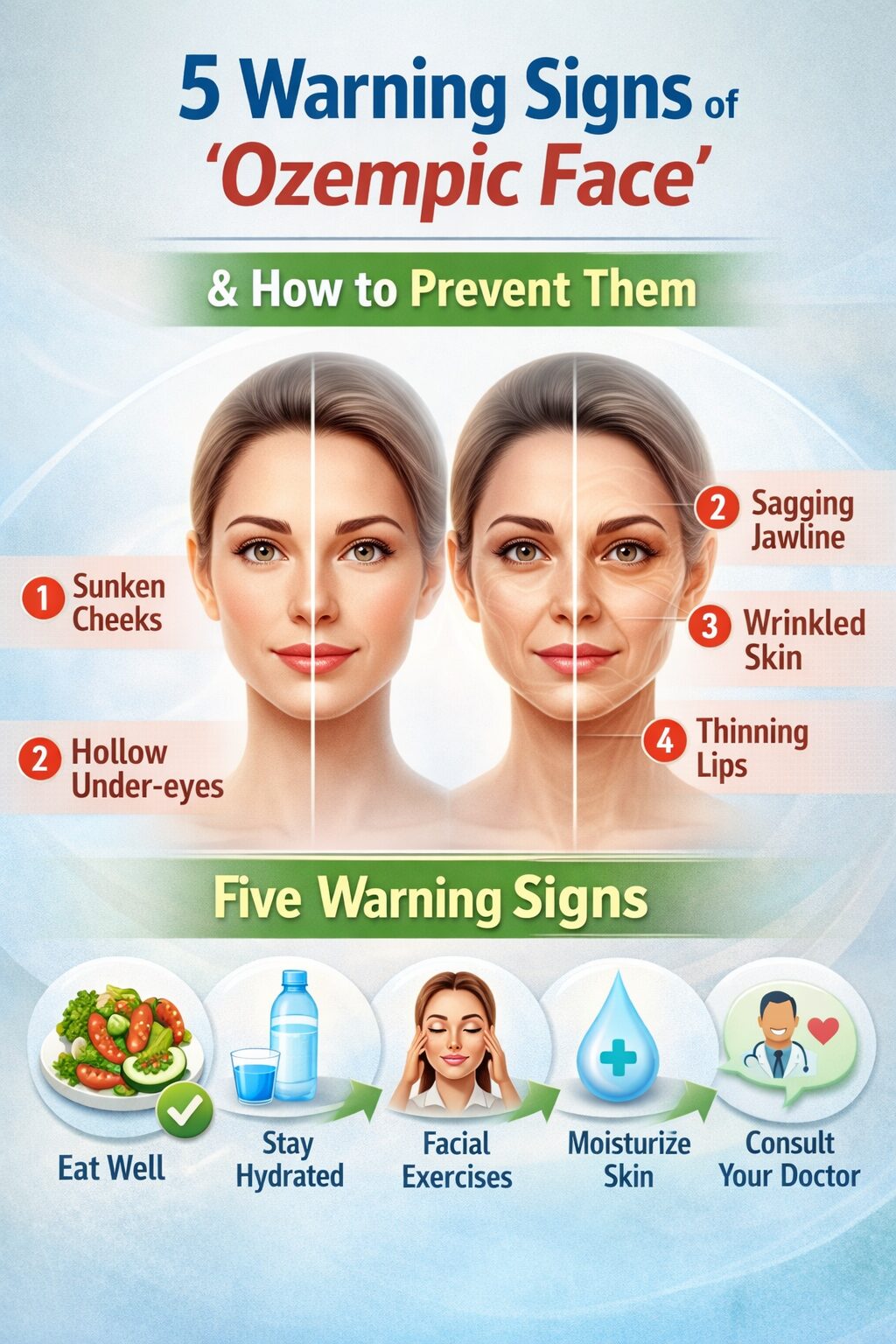
- Hollow or sunken cheeks that weren’t there before
One day your face feels slimmer.
Then suddenly, it feels… empty.
Cheeks that once looked gently full start to dip inward, especially near the cheekbones. This is often one of the earliest changes people notice.
Why it happens:
- Facial fat pads shrink quickly
- Skin elasticity declines with age
- Rapid weight loss outpaces skin adaptation
It’s not dangerous—but it can feel emotionally jarring, especially if the weight loss itself felt like progress.
- A sharper, more tired-looking jawline
A defined jawline sounds appealing in theory. In reality, it can sometimes look overly sharp, even harsh.
When fat around the lower face reduces quickly:
- Jowls may become more noticeable
- Skin can appear loose or slack
- The face may look older despite overall health improvement
People often describe this as looking “drawn” or “worn,” even when they feel physically better.
- Increased wrinkles or creases around the mouth and eyes
These lines weren’t new—but suddenly, they’re impossible to ignore.
Nasolabial folds deepen. Fine lines around the eyes feel sharper. Makeup settles differently.
This isn’t Ozempic causing wrinkles. It’s the loss of underlying volume that once kept skin smooth.
Weight loss reveals what time was already doing—just faster.
- Dry, dull, or less elastic skin
Some people notice their skin feels:
- Less plump
- Slightly dull
- More prone to dryness
This can be linked to:
- Reduced calorie intake
- Lower fat consumption
- Inadequate protein
- Dehydration
Weight loss medications often reduce appetite significantly, and skin health quietly pays attention to what you’re not eating.
- Friends say “You look different” — but can’t explain how
This one hurts the most, because it’s vague.
Not criticism. Not praise. Just uncertainty.
When multiple people say it, you start wondering whether the change feels healthy or unsettling. Often, they’re reacting to facial volume loss, not illness.
Your face tells your story before you do.
How to prevent or soften “Ozempic face” — realistically
There’s no single fix, but there are ways to reduce the impact.
- Slow weight loss matters more than total weight loss
Rapid loss is the biggest risk factor.
Gradual, steady weight reduction gives:
- Skin time to adapt
- Collagen a chance to respond
- Facial tissues time to settle
This often means working closely with your doctor rather than pushing for the fastest results.
- Protein is not optional
Protein supports:
- Skin structure
- Muscle tone
- Collagen production
When appetite drops, protein is often the first thing people unintentionally under-eat.
Aim for consistent protein intake, even on low-hunger days.
- Hydration is simple, but underestimated
Dehydrated skin looks thinner and more fragile.
Water doesn’t “plump” skin magically—but chronic dehydration absolutely worsens facial changes.
Small habit. Real effect.
- Strength training helps more than people expect
Losing fat without maintaining muscle accelerates that “deflated” look.
Resistance training:
- Preserves lean mass
- Improves overall body composition
- Supports a healthier, more balanced weight loss
You don’t need heavy weights. Consistency matters more.
- Cosmetic options exist—but they’re not mandatory
Some people explore:
- Dermal fillers
- Skin-tightening procedures
- Collagen-stimulating treatments
These can help—but they’re personal choices, not requirements. Many people prefer letting their face settle naturally over time.
There’s no moral obligation to “fix” your face.
A quiet misconception worth clearing
“Ozempic face” is often framed as a failure or a warning sign.
It’s neither.
It’s a signal—that weight loss happened quickly, that the body is adjusting, that appearance and health don’t always change at the same pace.
For many people, facial features soften again over months as weight stabilizes and nutrition improves.
Closing thought
Weight loss is visible.
Health is often quieter.
If your face looks different, it doesn’t mean something is wrong. It means your body is changing—and change is rarely neat.
The goal isn’t to look younger, sharper, or socially approved.
It’s to feel healthier in a body you can live in comfortably.
And sometimes, that includes giving your face time to catch up with the rest of you.
FAQs (Paragraph-Style Answers)
- What is “Ozempic Face”?
Ozempic Face is an informal term describing facial changes such as hollow cheeks, sagging skin, and a tired appearance that may occur after rapid weight loss, especially with GLP-1 medications like Ozempic. - Why does Ozempic cause facial changes?
Ozempic reduces appetite and promotes rapid fat loss. Facial fat is often lost early, leading to reduced volume and decreased skin support. - Is Ozempic Face permanent?
In many cases, facial changes are partially reversible with weight stabilization, improved nutrition, hydration, and skin care, though some volume loss may persist. - Who is most at risk of developing Ozempic Face?
People who lose weight quickly, older adults, and individuals with low baseline facial fat or poor skin elasticity are at higher risk. - How soon can Ozempic Face appear?
Facial changes can begin within weeks to months of starting Ozempic, depending on the rate of weight loss and individual skin characteristics. - Does Ozempic Face mean the medication is unsafe?
No, Ozempic Face is a cosmetic effect rather than a dangerous side effect, but it signals the need for better nutritional and weight-loss pacing. - Can slowing weight loss prevent Ozempic Face?
Yes, gradual weight loss allows skin and connective tissue more time to adapt, reducing the severity of facial changes. - How does protein intake help prevent Ozempic Face?
Adequate protein supports collagen production, skin repair, and muscle mass, helping maintain facial structure during weight loss. - Does hydration affect facial appearance on Ozempic?
Proper hydration improves skin elasticity and fullness, reducing dryness and sagging associated with rapid fat loss. - Can resistance training help prevent facial sagging?
Resistance training preserves muscle mass and improves overall body composition, indirectly supporting facial firmness. - Are collagen supplements effective for Ozempic Face?
Collagen supplements may support skin health, but results vary and they work best when combined with sufficient protein and vitamin intake. - Does Ozempic Face occur with other GLP-1 drugs?
Similar facial changes can occur with other GLP-1 medications like Wegovy or Mounjaro if weight loss is rapid. - Can skincare routines reduce Ozempic Face?
Topical retinoids, moisturizers, and sun protection can improve skin texture and elasticity but cannot replace lost fat volume. - Are cosmetic treatments the only solution for Ozempic Face?
No, many people see improvement with nutrition optimization and weight stabilization; cosmetic procedures are optional, not mandatory. - When should a doctor be consulted about facial changes?
If facial changes are distressing or accompanied by nutritional deficiencies or excessive weight loss, medical advice is recommended.
About The Author
